
SPACE Lab
Spatial Prediction & Adaptive Contexts Engine
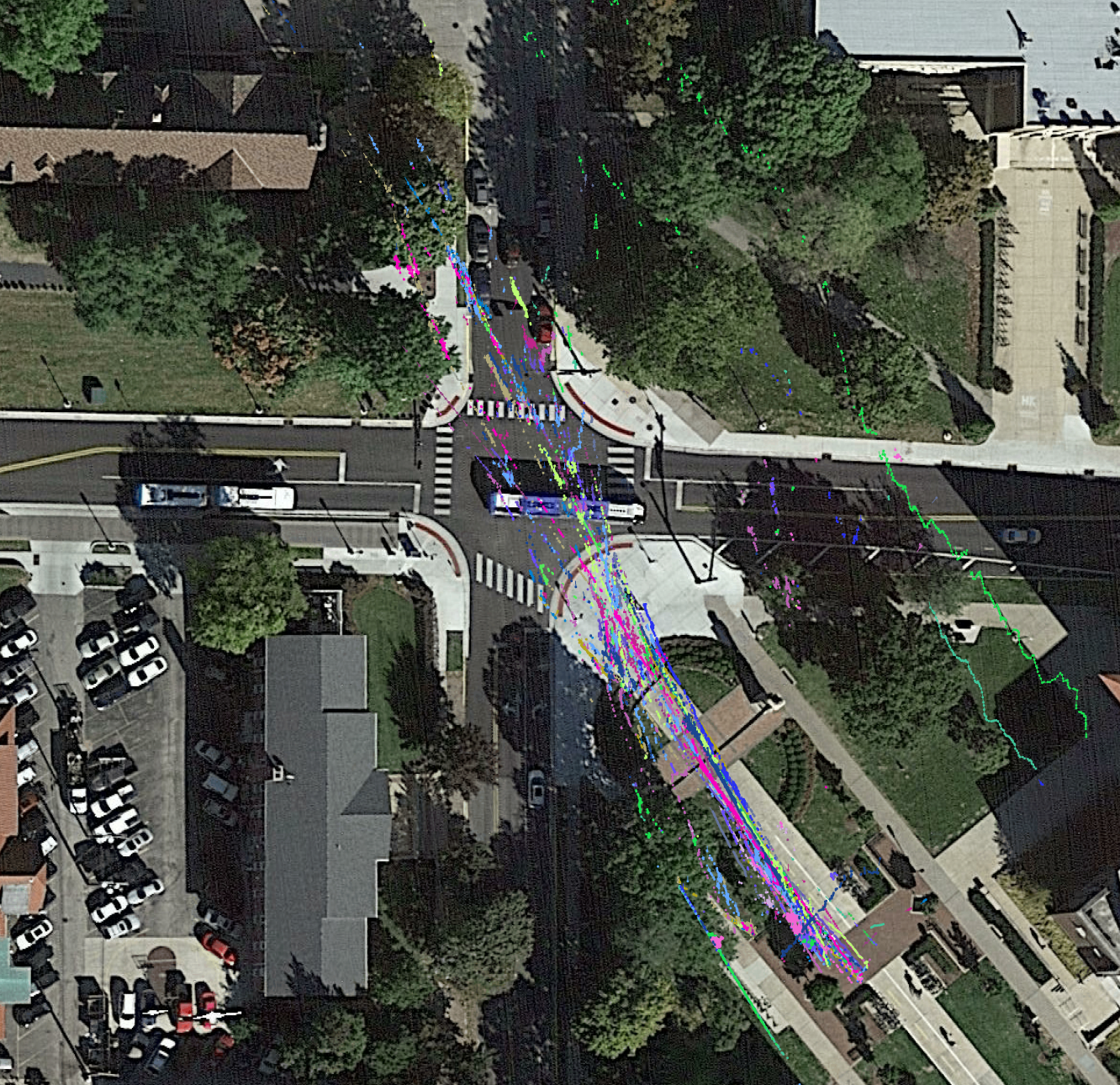
The SPACE Lab develops advanced digital twin environments for predictive site simulation. Our research focuses on analyzing movement patterns, human behaviors, and environmental condition testing within the built environment. While empirical data from our SCOUT observation toolset feeds the system's baseline, the core power of the SPACE framework lies in its ability to run dynamic behavioral simulations on fully prospective sites or on sites proposing programming interventions. This allows designers to rigorously test and optimize environments long before construction begins.
Core Methodologies

Dynamic Simulation
Human Behaviors and Digital Twin Modeling
AI/ML Camera Vision
Automated Inventory and Analysis
-
The Purdue Built Environment Database is a foundational custom dataset specifically developed to train machine learning models for landscape architecture and urban design applications. Unlike generalized open source image datasets, PBED is curated to capture the unique spatial and behavioral nuances of pedestrian flows, micro mobility, and human environment interactions within complex site conditions. This dataset serves as the core training material for our automated observation models. It ensures high fidelity detection and categorization tailored specifically to the built environment.
https://app.roboflow.com/pbed-purdue-built-environment-database/siteanalyzer-9class/2
-
SCOUT serves as the primary hardware infrastructure for the lab's automated site observation methodology. Designed as a modular edge computing camera node, this system captures localized pedestrian movement, site usage, and spatial flows in real time. Crucially, SCOUT is built for future scalability. Its payload architecture allows for the subsequent integration of environmental sensors like temperature, humidity, and air quality to create a comprehensive data overlay. This hardware acts as a cross disciplinary tool. It simultaneously supports our spatial analytics and provides raw video telemetry for broader spatial health and computer science initiatives.
-
Translating raw video feeds into actionable spatial data requires a rigorous machine learning pipeline. This workflow utilizes a custom trained 9 class AI detection model (YOLO11m) optimized for site analysis. The repository contains the comprehensive methodology for our computer vision processes. It details the parameter coding, bounding box rules, and model confidence thresholds used to achieve accurate behavioral tracking. By open sourcing these workflows, we aim to provide reliable and replicable frameworks for integrating artificial intelligence into landscape architecture research and practice.
-
Operating physical AI hardware within public spaces necessitates strict ethical and privacy standards. The deployment of the SCOUT system is governed by robust Standard Operating Procedures designed to ensure complete data anonymization and privacy protection. This includes edge processing protocols where video feeds are scrubbed of personally identifiable information before spatial data is stored or analyzed. All observational methodologies and hardware deployments are rigorously reviewed and operate under full Institutional Review Board compliance.
LINK TO BEST PRACTICES GUIDE
-
The development and refinement of our digital twin models are deeply integrated with undergraduate mentorship. Student researchers act as vital lab technicians and directly contribute to the engine's capabilities. They code behavioral parameters, test environmental reactions, and refine agent logic datasets. This hands on methodological work ensures the underlying algorithms accurately reflect real world site usage while providing students with high level exposure to applied artificial intelligence in design.
-
Before simulating human behavior, physical landscape architecture sites must be meticulously translated into the digital engine. This requires a highly accurate spatial foundation. The construction methodology involves modeling detailed site topography, physical obstacles, micro climate zones, and navigation pathways. This process guarantees that the digital twin operates with the exact spatial constraints of the real world. It provides a rigorous and reliable testing ground for all subsequent agent based modeling and environmental simulations.
-
The human agents within the simulation engine operate on complex predictive algorithms informed directly by the observational data captured through our hardware nodes, filtered through complex and physiological, perceptive, and preference traits embedded in each unique actor. This behavioral logic dictates how agents navigate the digital twin, select pathways, and interact with the built environment. By grounding the agent based modeling in localized real world site flows, the engine can accurately simulate future usage patterns. We can test proposed design interventions and analyze spatial efficiency before any physical construction begins.
-
Moving beyond static spatial analysis, the engine incorporates dynamic time based events into its simulations. This methodology integrates fluctuating environmental variables directly into the digital twin. Agents within the model react realistically to localized weather effects like shifting wind speeds, sudden precipitation, and day to night transitions. This provides unprecedented insight into how environmental factors alter human behavior and site habitation over time.